


![Indian Institute of Technology [IIT], Delhi](https://blogs.lawships.in/wp-content/uploads/2020/05/download.jpeg "JOB POST: Professors at Indian Institute of Technology [IIT], Delhi: Applications Open")


Pooja graduated with B.com, B.L (Hons) from Dr. Tamil Nadu Ambedkar Law University, School of Excellence in Law, Chennai in 2019 and pursued her LLM at Stockholm University. She was chosen for one of the most prestigious programs with only 25 students picked from 33 countries. The program is ranked #2 on the Global Arbitration Review and is highly competitive.
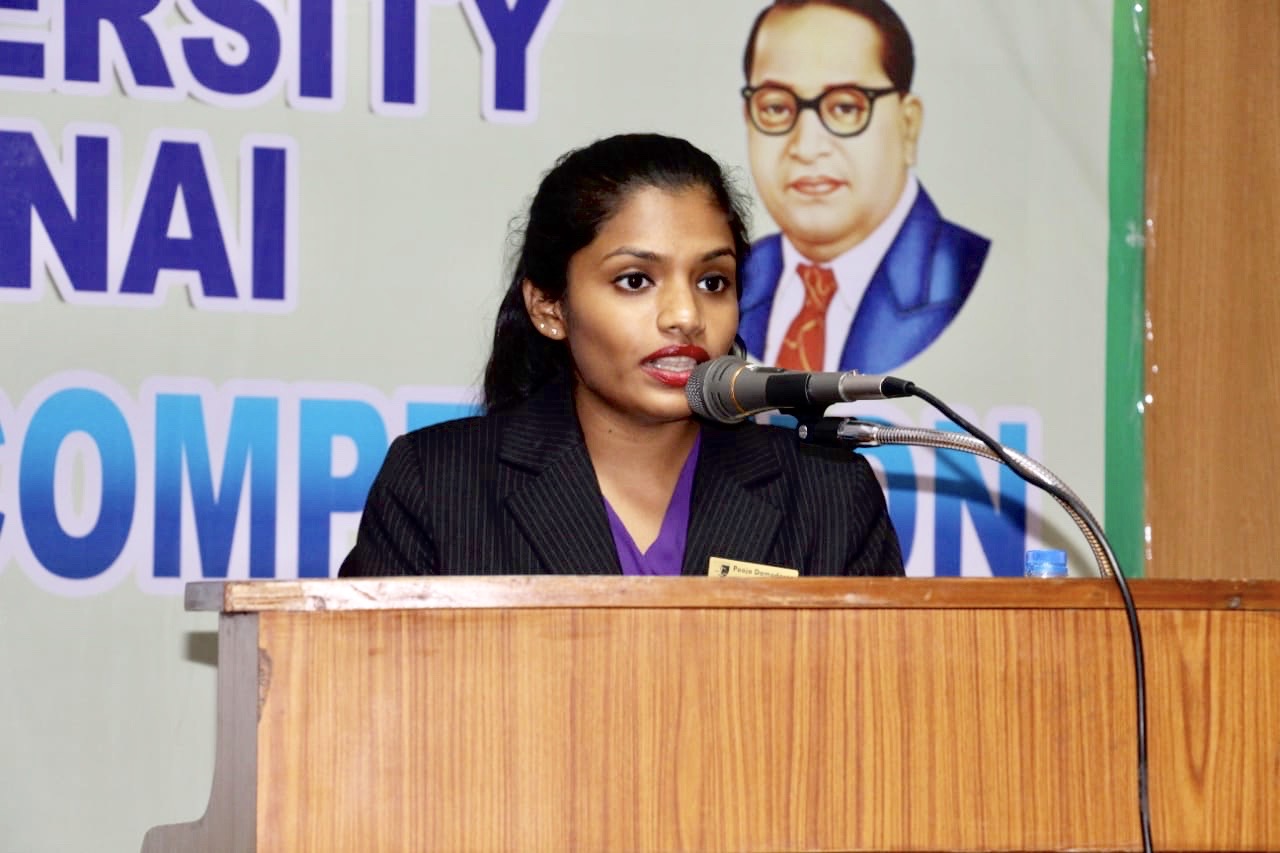
Tell us about your experience at Dr. Tamil Nadu Ambedkar Law University, School of Excellence in Law, Chennai.
I graduated with B.com, B.L (Hons) from Dr. Tamil Nadu Ambedkar Law University, School of Excellence in Law, Chennai in 2019. My experience with Dr. Tamil Nadu Ambedkar Law University, School of Excellence in Law aka SOEL was fundamental to my legal education.
I pursued my bachelors from SOEL because it was the leading law university in Chennai, Tamil Nadu. My bachelor degree was for a duration of 5 years and my academic curriculum was divided into 10 semesters with 42 different law subjects.
I would say in short, SOEL was the lay stone for my legal knowledge and the highlight was the exposure it gave me. I was an active mooter and had access to several internships with leading law firms in Chennai and a judicial clerkship with judges of Madras High Court.
Tell us about your internships and competitions from School of Excellence
I absolutely enjoyed moot court competitions, legal debates and writing for legal blogs. I participated in 14 National and 1 International Moot Court competition in various disciplines of law and emerged victorious in several of those.
Few take away from mooting is, in-depth research, practising arguments, and teamwork can take you a long way. I was also the additional secretary of SOEL’s moot court association and arranged two national moot courts on environmental law and tax law annually.
Mooting not only helped me expand my horizon in legal education but also paved the way to several other opportunities.
Most moot court competitions are judged by legal practitioners which allowed me to interact and communicate with them. I had the chance to intern with senior counsels of Madras High Court and also judicial clerkship because of the platform moot court established for me.
With these internship experiences, I understood my interest was deeply rooted in litigation and dispute resolution.
What was the reason behind choosing International Commercial Arbitration? Why did you decide to pursue LLM from a foreign country?
After my final semester exam, I conducted a cumulative assessment of my internships interests and subjects I enjoyed mooting which made me conclude that dispute resolution and arbitration is where I would like to expand my knowledge. Moreover, practical exposure to litigation and arbitration ensured my interest in this front.
In order for me to pursue this interest of mine and to start my career as both a litigator and an arbitration practitioner, I felt the next step would be to gain an LLM in arbitration.

I checked for Global Arbitration Review (GAR) LLM ranking and the International Commercial Arbitration Law programme founded by Patricia Shaughnessy and currently directed by Daria Kozlowska Rautiainen was ranked #2 globally for arbitration courses.
The reason why I choose a foreign country was purely based on the LLM ranking list. Further, I believe that Stockholm is a preferred international arbitration seat and the program offered is prestigious and highly competitive.
How was the LLM Application procedure? Did you take Consultancy Services?
The application process was quite simple. I did not take any consultancy service. I shortlisted to apply for the International Commercial Arbitration Law (ICAL) program at Stockholm University and checked their course page
The details regarding the application process and entry requirements are provided on their website. The selection criteria include a cv, two letters of recommendation and a personal statement of purpose. All documents were to be uploaded on the portal. The results subsequently were conveyed two months later.
Tell us about Stockholm University and it’s LLM Program.
Stockholm is the heart of Scandinavia and a city built on water. It’s terrific and so is the education it offers. Stockholm University’s ICAL program is world-renowned and has remarkable alumni.
The course structure is meticulous and provides access to Stockholm Chamber of Commerce (SCC) and other top-tier firms such as Baker Mckenzie, Shearman and Sterling, Mannheimer Swartling, Roschier and Vinge. The program is divided into two semesters.
The program is balanced with extensive academic tasks and practical exposure. The first semester comprises of academic assignments, multiple-choice questions and a final exam which ensures you understand the basics of international commercial arbitration law.
However, the highlight for me personally was the mock trial week with leading law firms in Stockholm, Sweden. The second semester focuses on advance international commercial arbitration law inclusive of guest lectures from renowned arbitration practitioners and final thesis. I am currently writing my thesis under my supervisor, Dr. Crina Baltag.
The Stockholm University’s LLM Program is very competitive, how did you make your profile suitable for the application?
The one way to stand out with an LLM application amongst others is to be honest, novel and unique. It’s highly recommendable to invest time in your statement of purpose and letter of recommendation. Every admission committee is looking for candidates who prove their interest in the LLM through competitions or work experience.
I ensured that my application stood out by adding emphasis on extra-curriculum activities (mainly moot court competitions), my published articles and my overall internship experiences.
Here are some absolute essentials you must bear in mind while applying for LLM:
- English Requirements– (IELTS, TOFEL, PTE) whichever test is required by your university.
Pro tip: Do as many practice tests before the exam as you can! - Statement of Purpose– Pro tip: The best paper is always rewritten. Do not expect your first draft to be the one to get you into a dream university. Keep your writing short and really focus on the purpose.
Why do you feel this course will benefit you?
Why should you be the selected candidate over others?
What do you intend to do after this course?
Also, highly recommend getting someone to proofread your documents. Trial and error is a method which works like magic. - Letter of recommendation- Pro tip: Real content is always better than superficial letters. Ask for recommendation letters from teaching staff/colleague/seniors who know you very well. The secret of a good recommendation letter is how well the mentor knows you and your abilities. Remember the admission committee would have seen many standard templates. So, in order for you to stand out, make sure your referee adds your skill sets, your abilities and what drove your interest to the program you are applying for.
- Time management- Pro tip: apply for universities before well before the deadlines. The later you submit, the lesser chance your application stands. Collect necessary documents – mark sheets, provisional certificates, passport scans, other credentials a week before you apply.
What is the difference between the two law schools you attended? What is your opinion on the research culture at Indian and Foreign Law schools?
I think the most evident difference between the two schools I attended was the quality of education, the practical exposure and available resources. I studied in a common law background, all about Indian laws for my bachelors and I personally struggled a lot to collect resources as the online database and books available at the university was limited.
This invariably affected our preparations for moot court competitions in comparison to students from other national and foreign universities who had access to various sources.
The other striking difference between common law and civil law method of teaching is the academic structure. I initially found it a bit difficult to integrate with the civil law system of reading, writing and grading.
However, I feel Stockholm University’s ICAL course is well-known not only for its’ reputed program but also the arbitration resource available. We have a separate arbitration library at Stockholm University. These features really help students not just to understand the subject in depth but also provides a platform to make the most of their studies.

Furthermore, I believe the way of research between law school in India and abroad is different. Most law schools in India really believe in the traditional method of examination to test the knowledge, whereas law schools abroad focus on methodology and assignments, i.e. testing students to write on novel/innovative subjects using the resources available.
These assignments help student’s writing, drafting and researching abilities to improve.
What are the most prominent career options in ICA, especially after a foreign LLM.
There are various career options after an LLM in International Commercial Arbitration. One could either study further and pursue a JD, PHD or doctoral studies or apply to firms as a counsel which have dispute teams.
Top legal 500 law firms in the world recruit lawyers with LLM degrees and many ICAL alumni’s are currently working as dispute resolution counsels with top-tier law firms, International Council for Commercial Arbitration (ICCA), Stockholm Chamber of Commerce (SCC), London Court of International Arbitration (LCIA), etc. More information available here.
How did you move ahead with your career after the LLM?
Despite covid-19, I am currently applying for internships with International Chamber of Commerce, (ICC) Asian International Arbitration Centre (AIAC), London Court of International Arbitration (LCIA) and other renowned arbitration institutions.
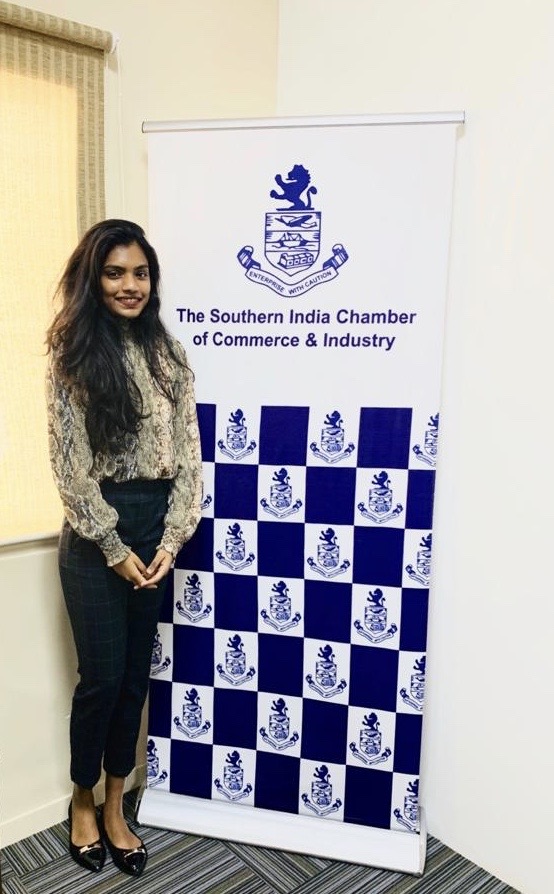
Also, publishing papers, a recent paper of mine published on the renowned Very Yong Arbitration Blog.
Parting advice to our readers
I believe an LLM or any education aboard would expose you to various perspectives. The biggest hurdle for me was to switch from common law to civil law background. It is important to weigh your investment and prepare yourself for what’s to come. I chose Stockholm and Sweden (SCC) because it is a popular seat for arbitration cases.
Also, the ICAL program is world-renowned and would be a perfect fit to kick-start my arbitration career. When you choose education aboard, be mindful that you always have several hurdles to face, could be visa issues, native languages, academic differences, cultural barriers and even also sudden unprecedented pandemics (like COVID 19).
It is important to realise irrespective of your challenges, you will benefit from your experience. To think back, T.D Jake’s quote now makes all the sense.
Wishing everyone with their applications in this tough time, best of luck!
In case of any queries/advise, reach me at my LinkedIn